| * |
corrected data |
| - |
no occurrence |
| ... |
data not available |
| . |
not zero, but not published due to the extremely inaccurate estimation |
| p |
less accurate estimation |
| ( ) |
less accurate data |
| bn |
billion |
| CEFTA |
Central European Free Trade Agreement |
| CHP |
combined heat and power generation |
| DWT |
deadweight tonne |
| ECOICOP ver. 2 |
Classification of Individual Consumption according to Purpose, version 2 |
| EU |
European Union |
| GDP |
gross domestic product |
| GT |
gross tonnage (gross registered tonnage) |
| GWh |
gigawatt hour |
| ha |
hectare |
| kg |
kilogram |
| km |
kilometre |
| km2 |
square kilometre |
| kW |
kilowatt |
m2 |
square metre |
| m3 |
cubic metre |
| MIGs 2009 |
Main Industrial Groupings 2009 |
| mln |
million |
| NIP |
Nomenclature of Industrial Products |
| NKD 2007 |
National Classification of Activities, 2007 version |
| NN |
Narodne novine, official gazette of the Republic of Croatia |
| NPISH |
non-profit institutions serving households |
| POS |
Programme of State-Subsidised Housing Construction |
| t |
tonne |
| '000 |
thousand |
| VAT |
value added tax |
Published by the Croatian Bureau of Statistics, Zagreb, Ilica 3, P. O. B. 80
Phone: (+385 1) 48 06 111
Web site: dzs.gov.hr
Press corner: press@dzs.hr
Persons responsible:
Andrea Galić Nagyszombaty, Director of Statistical Methodologies, Quality and Customer Relations Directorate
Mario Vlajčević, Director of Demographic and Social Statistics Directorate
Suzana Šamec, Director of Macroeconomic Statistics Directorate
Edita Omerzo, Director of Spatial Statistics Directorate
Milenka Primorac Čačić, Director of Business Statistics Directorate
Lidija Brković, Director General
Prepared by: Kristijan Jurić and Krunoslav Stažić
Editor: Ljiljana Ostroški
Technical Editor: Ankica Bajzek Cesar
Language Editor: Maja Gregorić
Translator: Neda Batinić
Graphic Design: Sanja Huseinagić and Nino Mrša
ISSN 3044-1692
USERS ARE KINDLY REQUESTED TO STATE THE SOURCE WHEN USING THE DATA
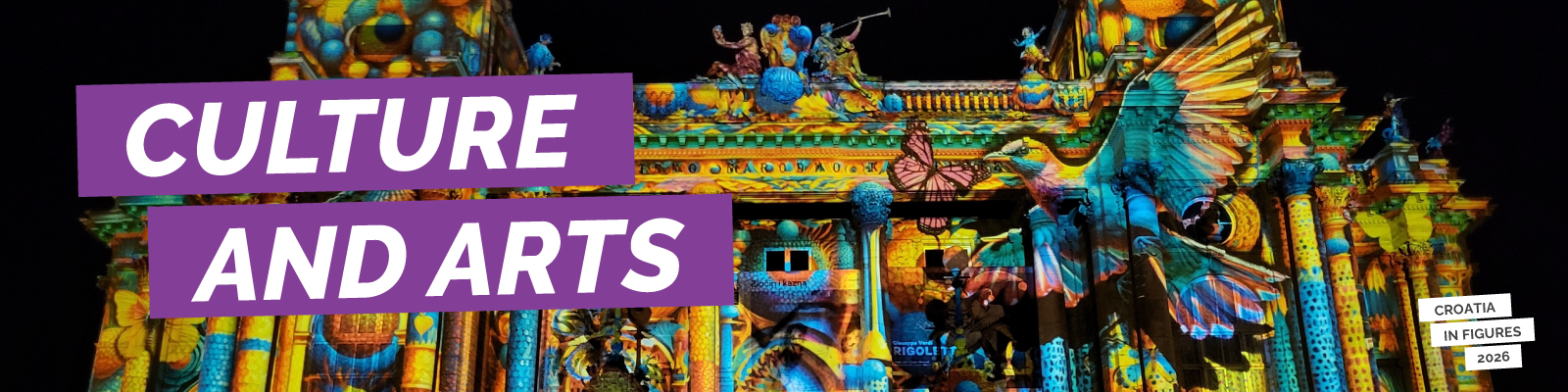
Culture and arts have an important role in the development of society because they contribute to the consolidation of social identity through the preservation of heritage and tradition. At the same time, cultural content encourages social cohesion and mutual tolerance and the connection of people of different origins, while the development of, for example, cultural tourism strengthens the economic prosperity of a country. Monitoring statistical data in this area is important because it enables a better understanding of the community's needs for cultural and artistic content, provides a basis for the distribution of public funds intended for cultural programmes and institutions, and helps quantify the economic impact of it all.
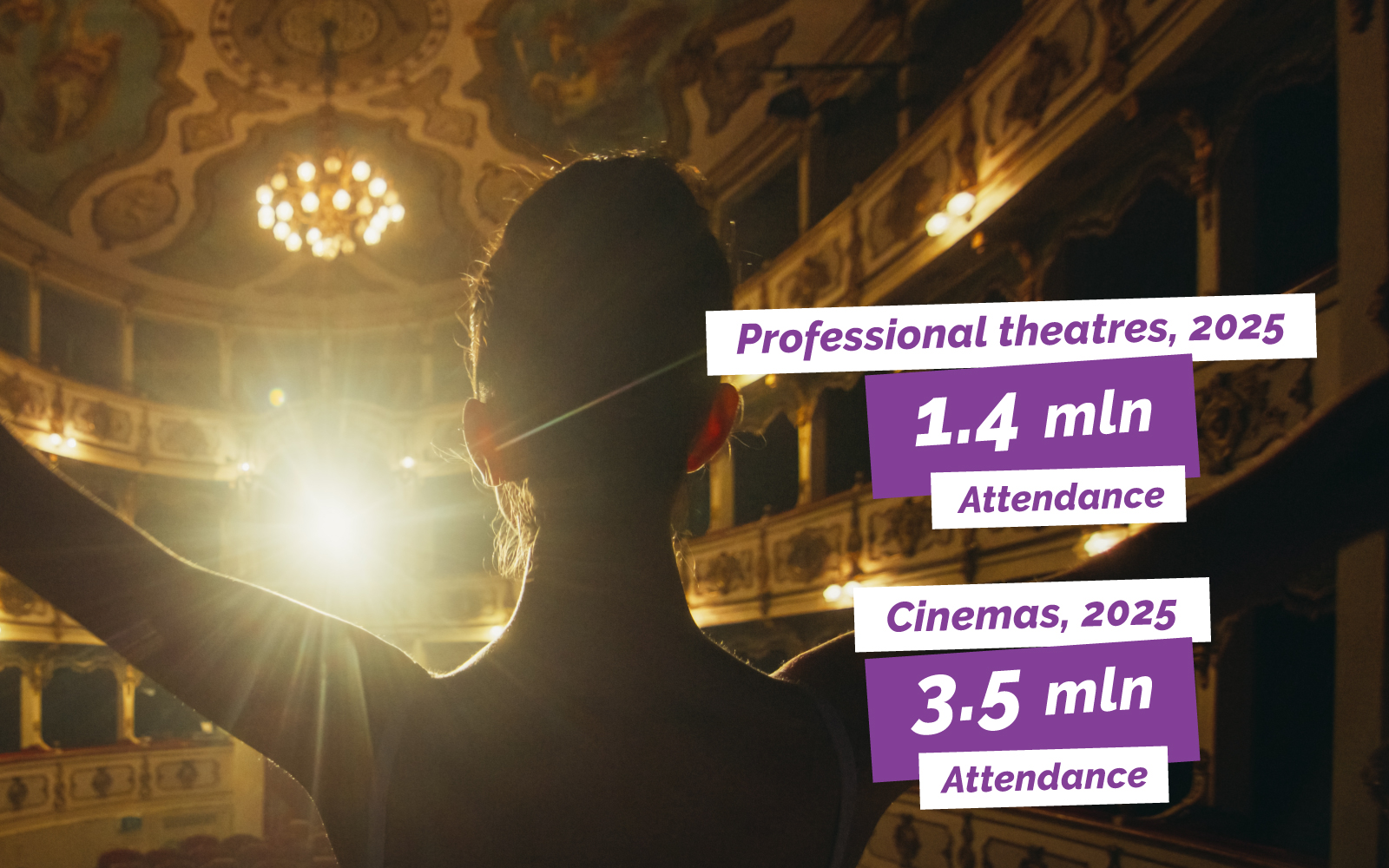
A total of 187 theatres operated in 2025, of which 127 were professional theatres with permanent stages, 25 were professional children’s theatres and 35 were amateur theatres.
A total of 13 600 plays were performed in Croatia and abroad. The plays were attended by 1 923 449 visitors in the Republic of Croatia and abroad. A total of 2 579 titles were performed in all theatres. Out of that, 60% were created by domestic authors. There were 661 premieres, which accounted for 26% of all titles performed, and 55% were created by domestic authors.
A total of 336 films were screened in cinemas across Croatia in 2025, including 255 premieres and 48 Croatian films. As many as 90% of cinema exhibitors screened films for more than six months of the year.
In 2025, a total of 80 orchestras and ensembles were active, of which six were symphony and large orchestras, 40 were chamber orchestras and 34 were chamber ensembles. A total of 1 403 concerts, performances and festivities were performed, which was 10% more than in 2024, and they were attended by 426 291 visitors, which was 53% more than in 2024.
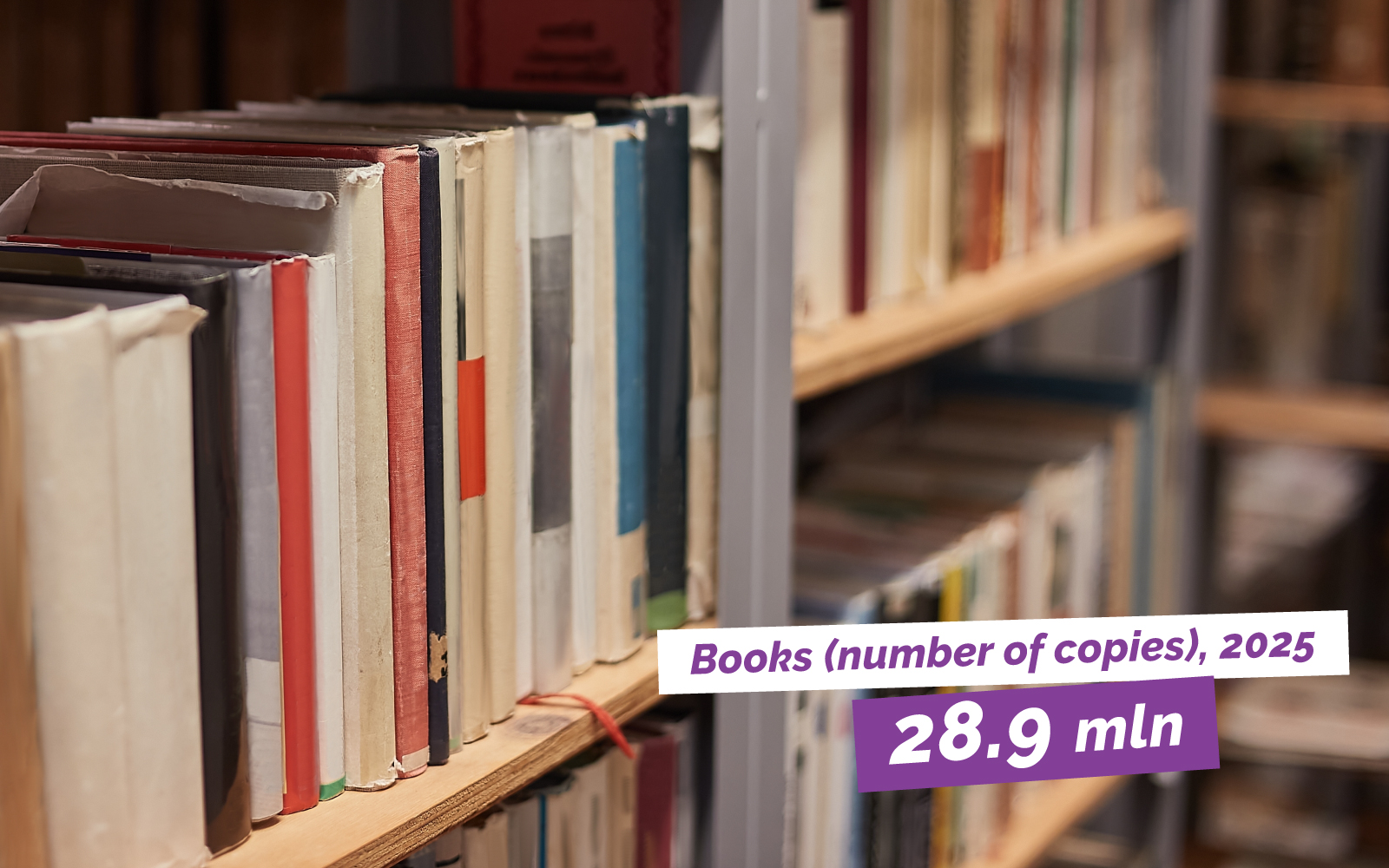
In 2025, a total of 1 861 libraries, including branches and subsidiaries, operated on the territory of the Republic of Croatia. This included one national library, 27 university and scientific libraries, 89 libraries at institutions of higher education, 101 specialised libraries, 308 public libraries, 967 libraries in basic schools, and 368 libraries in secondary schools, housing almost 29 million volumes of books.
← Previous Next →

 Hrvatski
Download data